

| Project | Network Rail Station Competition |
| Size | Various |
| Brief | RIBA Competition to reimagine small to medium-sized railway stations |
| Date | 2020 |
| Location | Buckshaw Parkway, Chorley |
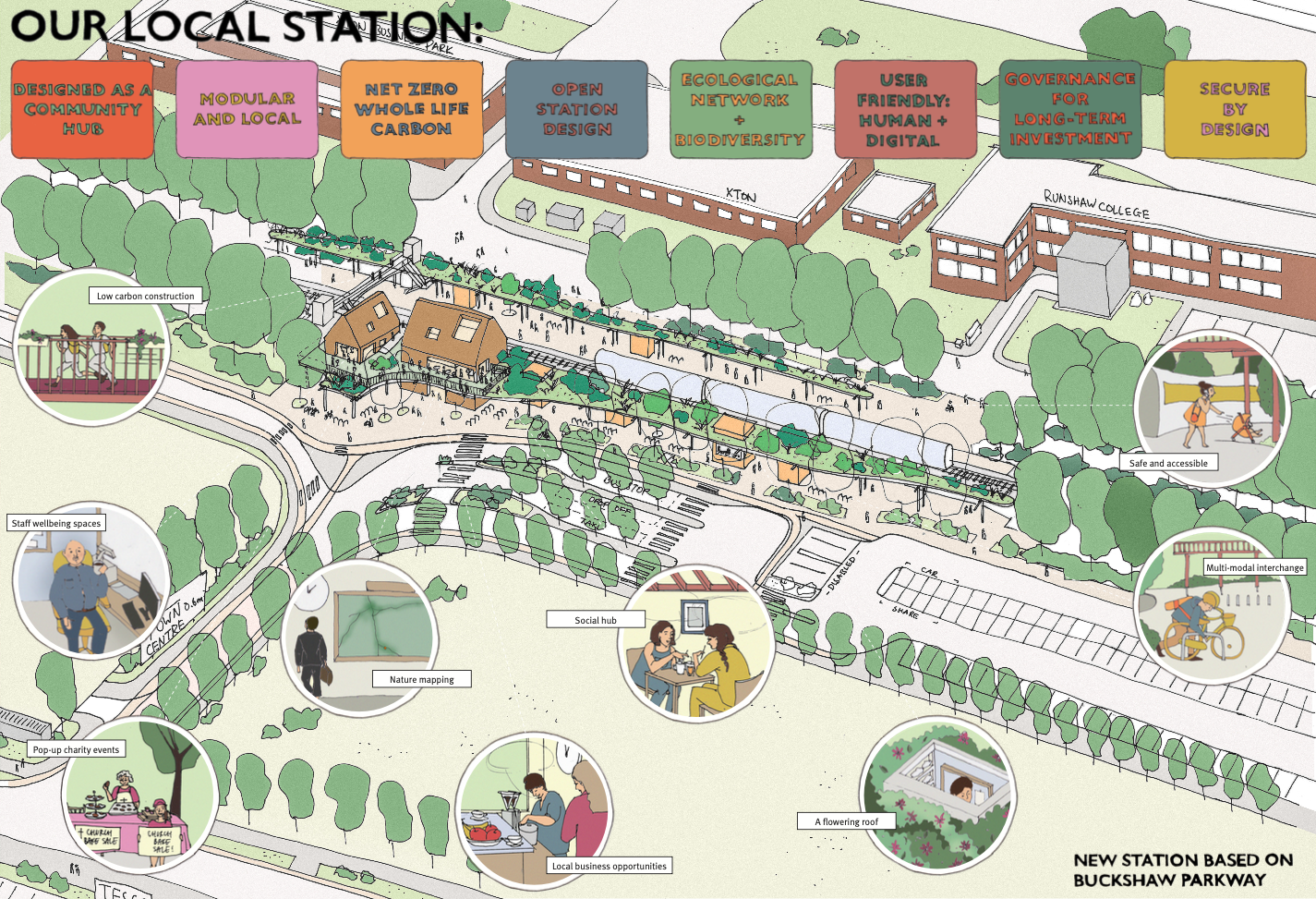
Our entry to this RIBA International Competition focuses on two critical, inter-related themes: biodiversity restoration and active travel.
As well as a human movement network, the rail network across the UK is a diverse habitat network. The 2018 government commissioned Varley Report looked at how Network Rail's approach to vegetation management could meet safety requirements whilst also ensuring protection and, where possible enhancement of this valuable asset. The report was commissioned as a result of public outcry at excessive tree felling and a perceived lack of consideration for environmental impact and biodiversity across parts of the network.
We believe rail transport can work hand in hand with active travel modes to provide more sustainable alternatives to car use, particularly in the provision of efficient and sustainable access to nature. The value of small rail stations should go beyond their role as mere boarding points in a movement network. They have the potential to become sustainable social community hubs, centres of ecological interpretation and information exchange.
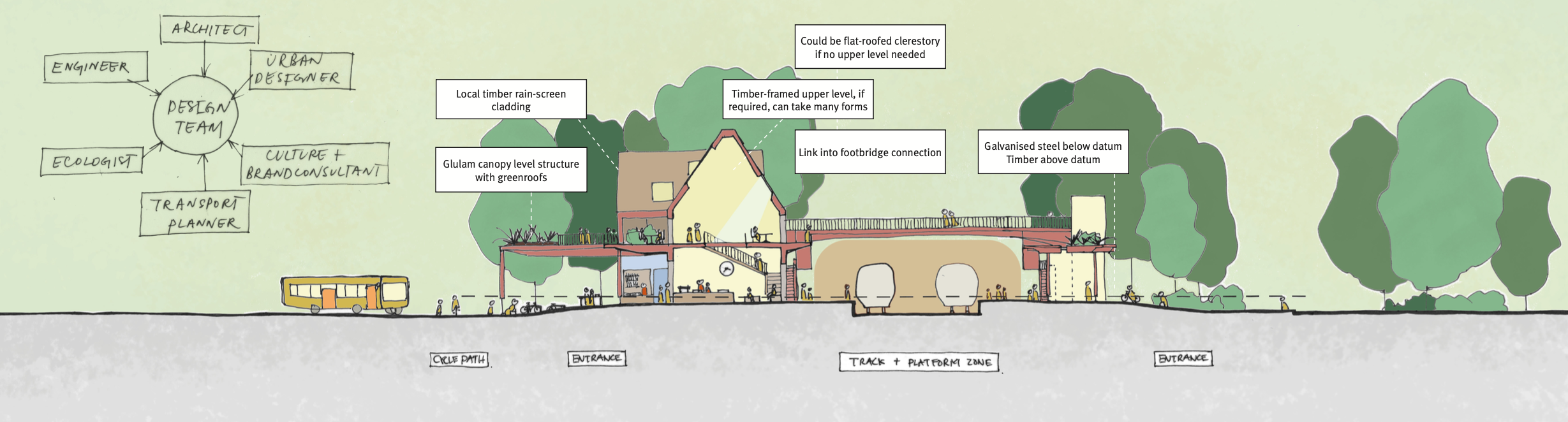
With these thoughts in mind our proposal for the design of new small stations explores the extent to which the continuity of track-side habitat can be maintained through the station itself and looks at alternatives to the increasingly prevalent single gate-line stations, the resu;t of shortsighted operational cost-cutting measures that can sever communities.
Our proposal for an Open Station Design will improve pedestrian access, making stations attractive locations for a wider range of shops, services and community facilities. In short, Network Rail could build on their already significant head-start over the road network as a more sustainable transport mode by moving towards a whole-life zero-carbon, zero-emission, low embodied energy and movement network integrated into local communities.


